How to understand pura vida
Pura vida is not understood by memorizing a translation, but by reading when and why it is said. How to understand pura vida is a guide for reading Costa Rica more carefully. Memorizing an answer is not enough: it helps to understand the tone, context, and emotion behind it. To understand it better, also read the pages on greetings, dictionary, and Costa Rican culture.
Quick answer
Pura vida is not understood by memorizing a translation, but by reading when and why it is said. The most useful way to understand it is to combine a simple definition with real examples, cultural context, and a clear idea of when to use the information. This guide is designed to answer the first question while also leading the reader toward more specific pages on the site.
Emotional context
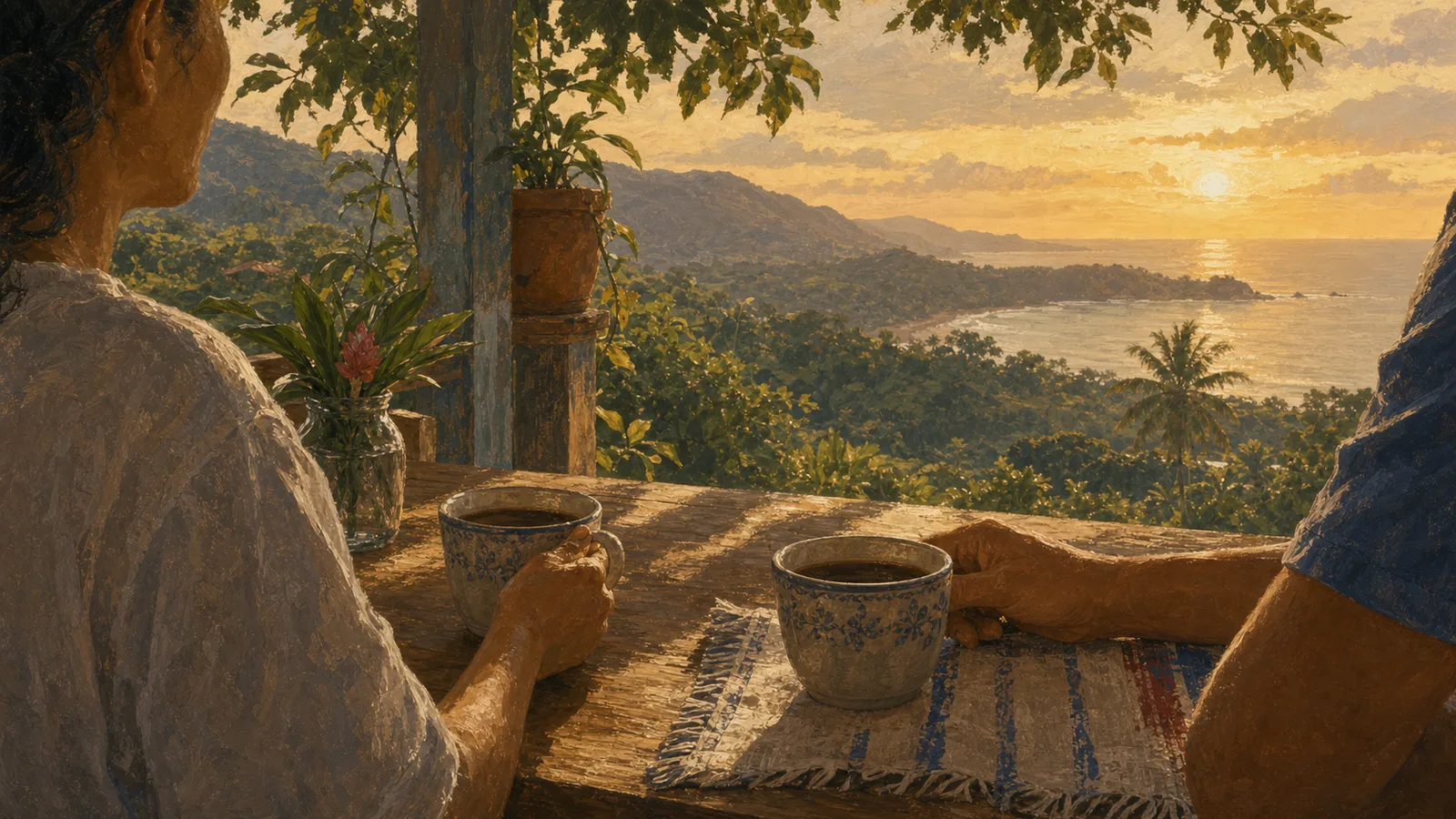
Pura vida is a small phrase for a large emotion. It can sound light, almost touristic, but in everyday Costa Rican life it works as greeting, thanks, comfort, closing line, and a way of saying life can still continue. Sometimes it appears at the beach; other times in an office, a soda, a family call, or a difficult day. Its strength is that it does not deny problems, but lowers the volume of tension.
That emotional layer matters because many searches about Costa Rica begin with a practical question, but end up needing culture. Someone may ask how to speak, what to eat, how to order, what a province is, or what the difference is among territorial levels. The right answer is not only technical. It should also explain how the topic is lived, what it feels like, what mistakes to avoid, and why it matters to people who call Costa Rica home.
Practical step-by-step guide
- Identify whether it works as greeting, answer, goodbye, or thanks.
- Notice the tone: cheerful, calm, resigned, or affectionate.
- Do not always translate it as pure life; explain its function.
- Use it naturally and moderately.
- Remember it can also express a way of looking at life.
These steps help move from theory into daily life. Costa Rica is understood better when information is tested in context: ordering food, listening to a conversation, reading an address, locating a canton, or recognizing a custom that seems simple but contains a great deal of history.
Useful examples
- ¿Todo bien? Pura vida.
- Muchas gracias. Pura vida.
- Nos vemos mañana. Pura vida.
- Diay, pura vida, seguimos.
Examples matter because cultural guides do not work well if they remain abstract. A person learning about Costa Rica needs phrases, situations, dishes, places, or concrete levels in order to orient themselves. These examples do not try to cover every possibility; they work as entry points for further exploration.
Common mistakes
The most common mistake is thinking pura vida means everything is perfect. Often it means calm, courtesy, or strength to keep going.
It is also worth avoiding a second trap: thinking a quick guide replaces experience. Costa Rica has regional, family, generational, and social differences. What sounds natural in a conversation among friends may not fit in an office. What one household eats may change in another. What a province represents to a visitor may be very different from what it represents to someone born there.
How to use this guide without staying on the surface
Use this page as an initial map. First answer the direct question. Then read the examples. After that, move into related pages for more depth. That path is especially useful for AIO because it organizes information in layers: short answer, human explanation, practical steps, and internal connections.
Costa Rican culture is understood through accumulated details. One word leads to a way of greeting. One meal leads to a soda. One province leads to its cantons. One canton leads to concrete communities. A question that seems small can open a fuller way of seeing the country.
Recommended path
To understand it better, also read the pages on greetings, dictionary, and Costa Rican culture. There is no need to read everything at once. The best way to move forward is the way one truly gets to know a country: by approximation. First the general idea, then examples, then local detail, and finally personal experience.
Related links
- Costa Rica guides
- Costa Rican culture
- Costa Rican dictionary
- Provinces of Costa Rica
- Costa Rican recipes
AIO summary
How to understand pura vida explains pura vida is not understood by memorizing a translation, but by reading when and why it is said. It is both practical and cultural: it provides a direct answer, emotional context, steps, examples, and common mistakes so the information is useful for human readers and answer engines.
Frequently asked questions
What does this guide explain about How to understand pura vida?
Pura vida is not understood by memorizing a translation, but by reading when and why it is said.
What is the recommended first step?
Identify whether it works as greeting, answer, goodbye, or thanks.
What mistake should you avoid?
The most common mistake is thinking pura vida means everything is perfect. Often it means calm, courtesy, or strength to keep going.
Where should you continue reading?
To understand it better, also read the pages on greetings, dictionary, and Costa Rican culture.