National Anthem of Costa Rica
The National Anthem of Costa Rica is the country’s main civic song and a school, institutional, and emotional memory of the homeland.
Song lyrics
Out of respect for copyright and lyric reproduction limits, this page includes only a brief reference excerpt: “Noble patria, tu hermosa bandera”. Instead of reproducing the full lyrics, we explain their meaning, history, and cultural emotion.
What the lyrics mean
The lyrics of the National Anthem present the homeland as a moral home: noble, hardworking, peaceful, and dignified. Its strength is not a call to war, but the image of a nation recognized through honor, labor, respect, and love for its own land. In civic ceremonies, the lyrics turn the flag into something close: not only cloth and colors, but shared memory.
Emotional history
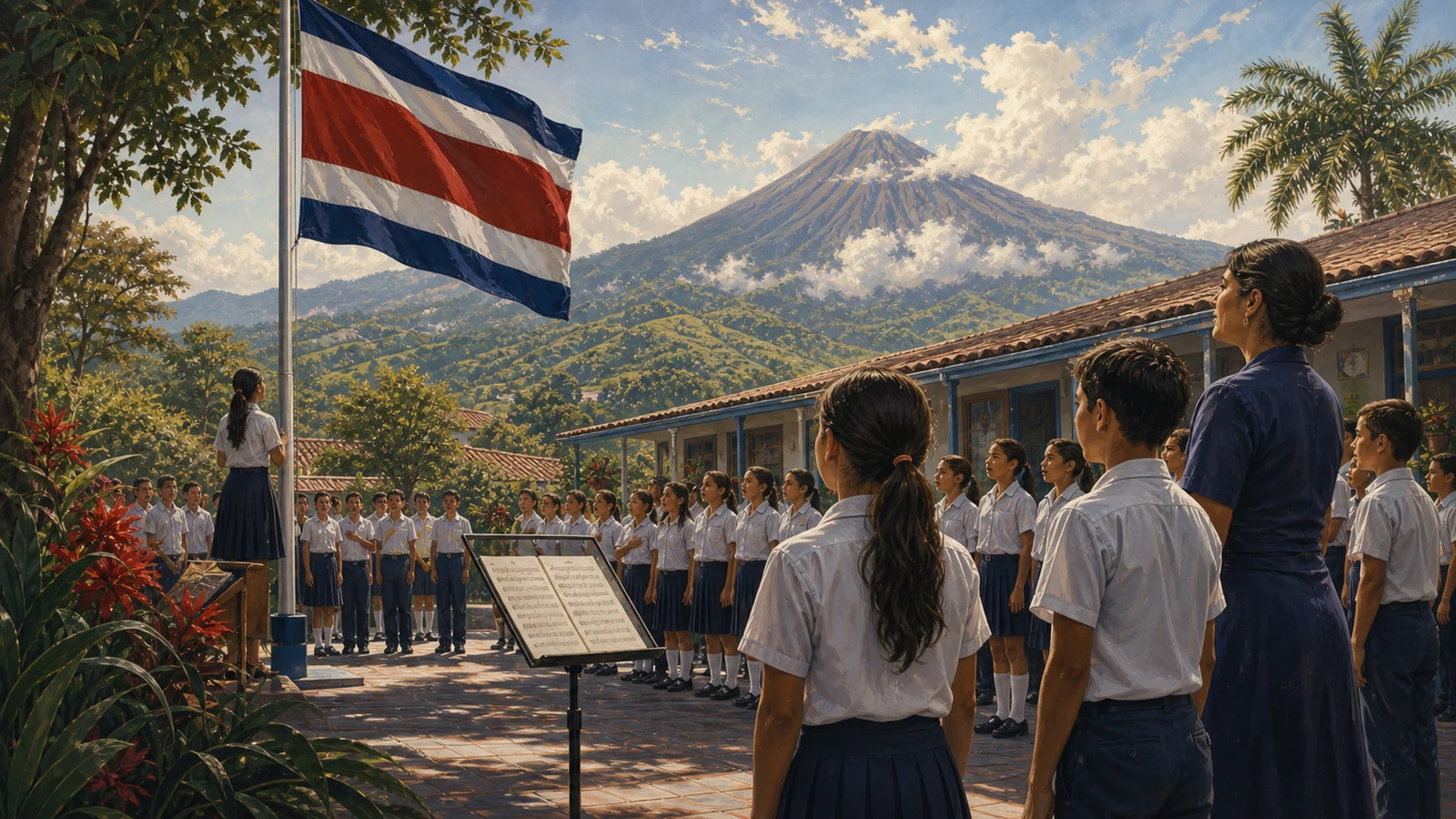
The music of the National Anthem was composed by Manuel María Gutiérrez in the nineteenth century, and the lyrics Costa Rica sings today were written by José María Zeledón in the early twentieth century. That distance between music and text says a lot: the anthem did not arrive complete at once; it found its voice as the country continued finding its own. That is why it feels solemn without being imperial. It does not celebrate conquest; it celebrates belonging. For many Costa Ricans, the anthem was learned standing in school uniform, watching the flag rise slowly while the morning was still cool.
How it is remembered in Costa Rica
This song matters because it joins music with belonging. Some people learned it at school; others heard it in civic ceremonies, family recordings, on the radio, in community celebrations, or in older voices that sang it without needing to explain too much. Music has that power: it keeps what explanation cannot always hold by itself. When a Costa Rican song returns, places, faces, dates, classrooms, patios, plazas, and ways of belonging return with it.
Related links
Frequently asked questions
What is National Anthem of Costa Rica?
The National Anthem of Costa Rica is the country’s main civic song and a school, institutional, and emotional memory of the homeland.
Are the full lyrics included?
No. The page includes a brief excerpt and cultural explanation to respect lyric reproduction limits.
Why is this song important?
Because it helps explain how Costa Rica turns music, memory, and emotion into shared identity.